

Computer messaging history, part 2 – A visual timeline (1990-2009)


Last Friday we started our look into the history of computer messaging and which applications and services we have used to communicate over computer networks through the decades.
So far we have covered the time period from 1960 to 1990, i.e. the era before the birth of the World Wide Web that we live in today. Now it’s time to continue our journey through the history of computer messaging, from 1990 until today.
 We have entered a new era when it’s easier than ever before to get your opinion out there. Writing a short message on Twitter takes almost no effort at all and it is immediately published on the Web. Services like Twitter have amplified the word-of-mouth effect several times over.
 We hear mostly about the social networking sites where English is the predominant language, like Facebook, MySpace and Twitter. But what about those sites where the vast majority of users don’t speak or use English? We don’t hear about those very much.
 If you suddenly find yourself without an Internet connection, there’s a good chance that somewhere a team of construction workers just uttered a collective “uh-oh” because their backhoe dug up a telecom cable. Oops.
 Here’s a little-known fact: Even when your hosting provider says it has provided 100% uptime, that doesn’t necessarily mean that your site hasn’t had any downtime.
 Lately there has been a lot of talk about RSS being dead, doomed, dying, a thing of the past, etc, etc, etc. (The latest wave seems to have been triggered by
  It seems like every month there is some kind of news story about leaked emails. When emails never intended for the public eye are leaked, the consequences can be huge. People have lost their jobs, whole companies have been embarrassed, and in some cases the information revealed can even be dangerous.
 Most single serving websites are very gimmicky, like
  The Facebook engineering blog often presents interesting findings about the nuts and bolts of Facebook and the technical side of running that enormous service. The latest post is about Facebook’s experimentation on how site speed affects the behavior of its users, called “
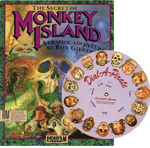 Software piracy has been around basically since the inception of software, and copy protection methods almost as long, so today’s discussions around DRM really isn’t anything new. All the way back in 1976, a certain Bill Gates
  We all enjoy taking a late morning and some extra sleep now and then, but usually we want to do it on purpose. A large number of Swedish iPhone owners who use their iPhone as an alarm clock got an unexpectedly late start this morning when it turned out that their iPhone’s clock was running two hours behind.
 How many servers does Google have? Nobody outside Google knows exactly how many servers the company has, but there have been a number of estimates through the years. One of the most quoted ones is


 Few have managed to make better use of the Open Source model than Mozilla, and we recently saw
  This is what Microsoft’s homepage looked back in 1994 when it was first launched, and its evolution during the following years.