






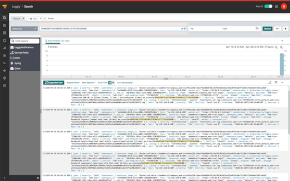
Identi.ca: Microblogging meets Open Source

 Not a week goes by without news about Twitter, the popular microblogging and social networking site. Things like how companies use Twitter for marketing, how consumers use it to flex their muscles, and how celebrities… well, use it to be celebrities.
While Twitter has a huge user base, it isn’t the only microblogging service on the Web. One of Twitter’s competitors that you should pay attention to is identi.ca. It combines the best, and occasionally the worst, of the microblogging and open source worlds.
 Last night, a routine maintenance of Sweden’s top-level domain .se went seriously wrong, introducing an error that made DNS lookups for all .se domain names start failing. The entire Swedish Internet effectively stopped working at this point. Swedish (.se) websites could not be reached, email to Swedish domain names stopped working, and for many these problems persist still.
 One short blog post can have a major impact on how a business can be seen. One little tweet can convince thousands of customers to buy a product or to walk away from a company forever. Whether or not an employee’s online activities are sanctioned by his employer, even a little involvement with social media can have some extreme results.
 With the Internet growing rapidly over the years, the number of generic top-level domains (gTLDs) has increased from just a handful to about twenty, with many more proposed or in planning. Some, such as .com and .edu, have seen widespread adoption and are a useful contribution to the Internet. Others haven’t been quite as lucky. You could say they have flopped.
 In a year in which tech companies have struggled to stay alive,
  The combination of high bandwidth and low-cost hard drives has created a small revolution in online storage. Web-based storage like
  Facebook has released a “
 It’s an exciting time for those looking forward to the rise of tablet computing devices: Not only are the rumors running rampant about Apple’s potential tablet, we’re also finally seeing what Microsoft is bringing to the table with their Courier project.
 When most people think of Open Source, they think of the big, highly-publicized projects like Linux, Firefox, and OpenOffice.org. But for every high-profile open source project, there are dozens of lesser-known projects. Just pay a visit to
  Last week, Gmail failed – for the third time in recent months. Yet again, the media and blogosphere declared the end of hosted services, software-as-a-service and cloud computing as we know it.
 Summer is over. The temperature is dropping and winter is looming on the horizon, which means that it’ll soon be time to take out those scarfs and snow caps and whatever other attire you use to protect yourself against the cold.


 Are young Internet users less stingy than old ones? That certainly seems to be the case when it comes to paying for online content according to
  The world isn’t a fair place, and yet another way this is laid bare is the huge differences shown in Internet penetration among the population of the various world regions. We thought it would be interesting to see what kind of an effect this is having on the world Internet population of today.
 The Facebook phenomenon continues. Yesterday Facebook announced that it has a whopping
 Comscore has released