

The cloud is often spoken of as a separate realm where data exists safely away from the messy realities of the physical world. But as the events of March 2026 have reminded us, the cloud has a physical home, and that home is susceptible to the same disruptions as any other infrastructure. Here’s how diversified monitoring across independent data centers can keep visibility intact when cloud services go down.
Learning from the 2026 Middle East AWS Outage
On March 1, 2026, a series of drone strikes targeted Amazon Web Services (AWS) data center facilities in the United Arab Emirates and Bahrain. The reported impact was severe:
- Over 109 services across the region were disrupted.
- Core foundational tools like Amazon S3 (storage) and EC2 (computing power) faced high failure rates.
This wasn’t just a technical glitch; it was a physical disruption to power, cooling, and network connections. The lesson for businesses is clear: Digital systems depend on physical stability. When conflict or infrastructure damage hits a major cloud hub, the impact spreads across the network like wildfire. If a website is hosted in AWS and its monitoring tool is also hosted in AWS, the smoke detector can burn down with the house.
The Advantage of Diversified Data Centers
Effective monitoring depends on independence. To accurately measure a website’s availability and performance, monitoring probes must operate outside the environment they are testing. If both the website and the monitoring tool rely on the same infrastructure provider, a disruption affecting that provider can also affect the monitoring system itself, which may create critical blind spots. A resilient monitoring strategy relies on infrastructure diversity across several key areas:
- Independent power systems: Each data center should rely on its own electrical infrastructure, including separate utility feeds, backup generators, and battery systems, to ensure monitoring continues even if a power failure affects one facility.
- Independent network connectivity: Monitoring probes should connect through different internet providers and routing paths, preventing a single network outage or provider failure from disrupting visibility.
- Independent physical infrastructure: Probes should operate in entirely separate buildings and facilities, reducing the risk that a localized disruption, whether environmental, technical, or geopolitical, can take multiple monitoring points offline at once.
The goal is not just geographic diversity but true infrastructural independence, ensuring monitoring continues even if a single facility or provider experiences an outage.
How to Monitor Your Website When the Cloud Is Down
Pingdom is a monitoring tool designed around these principles. Rather than relying primarily on large cloud platforms, most Pingdom probes operate from independent local data centers distributed around the world. These locations sit outside the major hyperscale cloud environments, providing an “outside-in” perspective that more closely reflects how real users experience a website. This approach adds resilience to the monitoring process itself. For example, in Japan, Pingdom probes are located in different data centers with separate IP ranges. In Düsseldorf, three probes operate from three separate facilities. If one location experiences disruption, the others continue testing uninterrupted.
By distributing probes across independent infrastructure, Pingdom reduces the risk of shared failure and provides more reliable insight into website availability and performance. In practice, this means businesses gain a clearer picture of how their services perform across the internet, even when major cloud facilities take a hit. Pingdom provides:
- Global Uptime Monitoring: Tests site availability every minute from over 100+ locations worldwide to ensure the “digital storefront” is open.
- Page Speed Analysis: Breaks down every element of a webpage, including images, scripts, and CSS, to identify exactly what is slowing down the user experience.
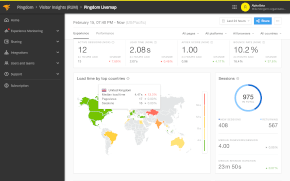
- Real User Monitoring (RUM): Collects data from actual visitors to show how the site performs across different browsers, devices, and geographic regions.
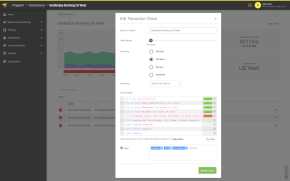
- Transaction Monitoring: Simulates complex user flows, such as logins, searches, and checkouts, to ensure critical business paths aren’t broken.
- Custom Alerts: Sends instant notifications via SMS, email, or Slack the moment a problem is detected, often before customers even notice.
Protect Website Uptime and Page Speed in a Crisis
In a crisis, a business needs the two key checks that keep operations alive: Uptime and Page Speed. These are the simplest “is it working or not?” indicators. Because Pingdom pings these from independent local data centers, visibility is not affected by the risks of storing data in AWS cloud warehouses. A business will know its site is down or slow before its customers do, even if the major cloud providers are in the dark.
The events of this month show that the cloud is just a series of buildings on the ground. By using a monitoring tool that sits elsewhere, businesses ensure they always have a clear view of their site, no matter what is happening in the physical world.
Is your monitoring as resilient as your business needs it to be? See your site from the perspective of over 100 independent global locations. Start a free 30-day trial of Pingdom today and experience the security of truly diversified monitoring.
Start Your Free Trial. No credit card required. Setup in minutes.